
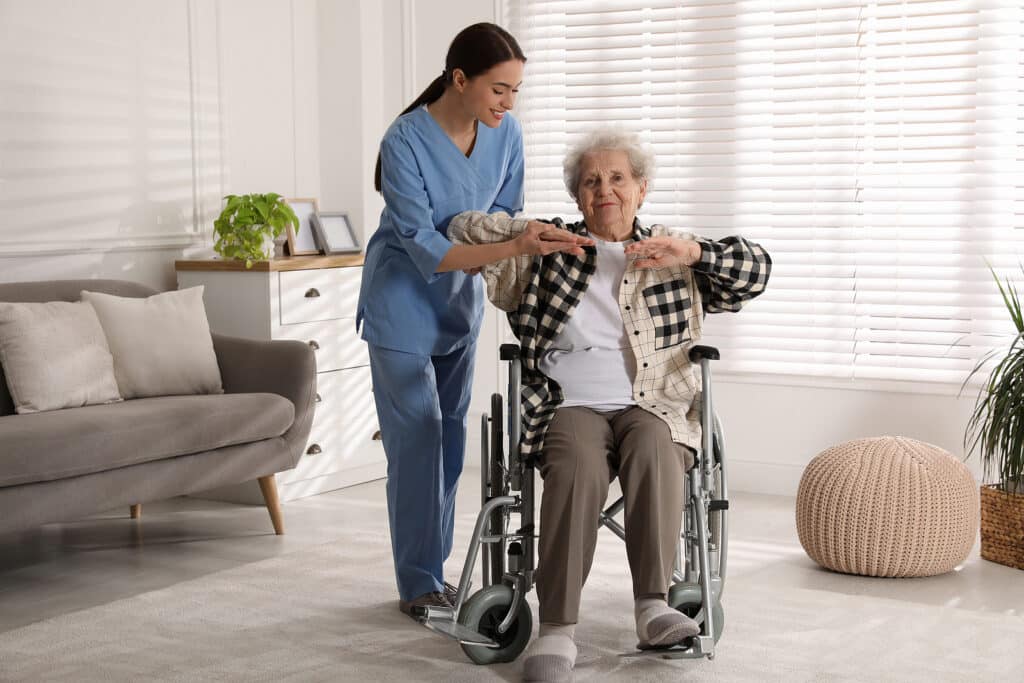
For seniors who wish to remain in their own homes as they age, maintaining mobility is often the key to independence. When the ability to move safely around one’s home diminishes, the risk of falls increases, and with it, the possibility of having to transition to assisted living. Fortunately, combining physical therapy and companion care at home services helps seniors improve their ability to successfully age in place while maintaining their quality of life.
The Mobility Challenge
As we age, natural changes in muscle mass, bone density, joint flexibility, and balance can impact mobility. Chronic conditions like arthritis, heart disease, or the effects of stroke may further complicate movement. What once was a simple task—standing from a chair, climbing stairs, or stepping into the shower—can become challenging or even dangerous.
These challenges don’t necessarily mean leaving home is inevitable. With the right support system, combining professional rehabilitation and daily assistance with the help of companion care at home, seniors can maintain and even improve their functional abilities.
How Physical Therapy Makes a Difference
Physical therapists are movement specialists who can develop personalized programs addressing a senior’s specific mobility challenges. The beauty of modern physical therapy is that it can be delivered right in the home environment, where it matters most.
Home-based physical therapy often includes the following:
- Assessment of the home environment for fall risks and recommended modifications
- Creation of exercise programs tailored to improve strength, balance, and flexibility
- Training seniors on the proper use of mobility aids like canes, walkers, or wheelchairs
- Developing strategies for safely navigating challenging areas like stairs or bathrooms
- Establishing realistic goals that preserve independence and confidence
The targeted interventions from physical therapy provide the foundation for improved mobility, but their impact continues long after the therapist leaves.
How Companion Care at Home Offers Support
Companion care at home helps seniors get the most out of the foundation laid by physical therapists. While physical therapists typically visit 1-3 times per week, home care can be present daily to:
- Reinforce exercise programs prescribed by physical therapists
- Provide standby assistance during mobility activities to prevent falls
- Offer reminders and motivation to complete recommended exercises
- Monitor for changes in mobility that might require therapy adjustments
- Assist with activities that remain challenging despite therapy
This partnership creates consistency that is essential for improving and maintaining mobility. Without the daily support and encouragement from companion care at home providers, the exercises and techniques learned in therapy might be practiced less frequently or incorrectly.
Take a hip fracture, for instance. Physical therapy alone might help seniors regain strength and learn safe movement techniques, but without the support from companion care at home during those first few weeks to assist with transfers and provide confidence, the risk of another fall remains high.
Ultimately, with a coordinated approach between therapists and home care, seniors receive both the specialized rehabilitation knowledge and the daily support needed to safely implement what they’ve learned.
The ability to move safely around one’s home often determines whether aging in place remains possible. The good news is that by combining physical therapy and companion care at home, seniors get the support they need to maintain their mobility, independence, and the joy of remaining in their home for years to come.
Providing exceptional Companion Care at Home in Arlington, VA, for seniors and families in the Northern Virginia area, including Arlington, Alexandria, McLean, Reston, Burke, Ashburn, Centreville, Springfield, Manassas, and Oakton. Call today to speak with our caring staff: (703) 272-8838.
Sources:
- https://keystone.health/aging-in-place-benefits
- https://www.brownhealth.org/be-well/physical-therapy-seniors-maintain-mobility-and-independence
- https://health.clevelandclinic.org/why-senior-mobility-is-so-important-right-now
- https://pmc.ncbi.nlm.nih.gov/articles/PMC3567319/#:~:text=transportation%20%5B2%5D

- How Much Does Dementia Home Care Cost in Virginia, and Who Can Help Pay? - October 9, 2026
- Who Pays for Respite Care? A Guide for Family Caregivers - October 9, 2026
- What Does In-Home Alzheimer’s Care in Northern Virginia Actually Look Like? - September 28, 2026