One of the most common — and emotional — questions adult children ask is:
“Is it safe for my parent to live alone?”
If you’re wrestling with this, you’re not alone. Many families feel stuck between two fears:
The truth is: safety isn’t always about one dramatic event. It’s often about the small warning signs that add up over time.
Ask the Expert: Safety Isn’t One Moment — It’s a Pattern
When families ask this question, it’s usually because something feels off — even if they can’t fully explain why.
As one home care expert puts it:
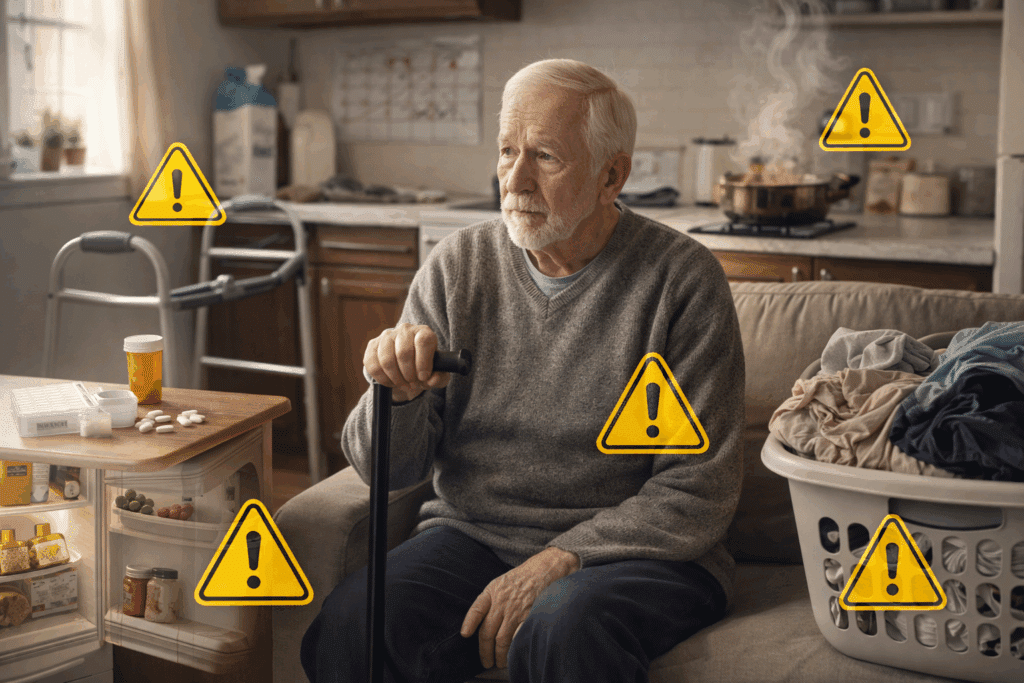
“This is one of the hardest questions families face. Safety isn’t just about one big incident — it’s about patterns. Falls, missed medications, spoiled food, confusion — those are red flags.
Needing support doesn’t mean your parent can’t live at home. Often, a little help is exactly what keeps them safely at home longer.”
That perspective is important because it shifts the conversation from:
“Are they safe today?”
to
“Are they getting less safe over time?”
Signs It May Not Be Safe for Your Parent to Live Alone
Sometimes families wait for a crisis — a fall, an ER visit, a stove fire — before making changes.
But in many cases, there are earlier warning signs.
1) Falls or “near falls”
Even if your parent says:
-
“I’m fine”
-
“I just tripped”
-
“It’s no big deal”
…falls are a serious indicator that mobility and balance may be changing.
Red flag: bruises, unexplained injuries, or furniture being used as “support.”
2) Missed medications
Medication mistakes can happen quietly and cause big consequences.
Watch for:
-
pills left in organizers
-
refills not being ordered
-
confusion about what to take and when
-
double-dosing “by accident”
3) Spoiled food or unsafe cooking habits
Food safety is a major clue that daily routines are slipping.
Look for:
4) Confusion, forgetfulness, or disorientation
It might start subtly:
-
forgetting appointments
-
repeating the same story
-
getting lost while driving
-
wandering in the neighborhood
-
confusion about day/night
Even mild cognitive changes can make living alone unsafe.
5) Poor hygiene or laundry piling up
When someone stops bathing regularly, changing clothes, or washing bedding, it can signal:
6) Isolation and loneliness
Living alone can be physically safe but emotionally unsafe.
Loneliness increases risk for:
The Big Misunderstanding: Help Doesn’t Mean “They Can’t Live at Home”
Here’s the good news:
Needing support does not automatically mean your parent has to move.
In fact, many seniors can continue living at home safely with the right plan — especially when support is added early, before a crisis happens.
Often, a little help is exactly what keeps them safely at home longer.
How Home Care Helps Seniors Live Alone More Safely
Home care can provide support that reduces risk while protecting independence.
Depending on your parent’s needs, a caregiver can help with:
✅ Fall prevention support and mobility assistance
✅ Medication reminders
✅ Meal prep and safe nutrition
✅ Light housekeeping (reducing trip hazards)
✅ Transportation to appointments
✅ Wellness checks and companionship
✅ Personal care support (bathing, dressing, grooming)
Even a few hours a week can make a meaningful difference.
Final Thoughts: Trust What You’re Seeing
If you’re asking “Is it safe for my parent to live alone?” there’s usually a reason.
Trust your instincts — and pay attention to patterns, not promises.
You don’t have to wait for an emergency to take action. Support can be proactive, respectful, and empowering.
Need Help Determining the Best Next Step?
📞 Call Incredicare today: (703) 272-8838
🌐 Visit us online at Incredicare.com